
Welding and assembly: welded sub-assemblies to drawings
We assemble your sub-assemblies using semi-automatic and laser welding, from parts cut, bent and rolled in our Bouskoura workshop: a single production chain, from sheet to welded sub-assembly.

- Semi-auto · laser
- Welding processes
The process is chosen according to the material, thickness, joint access and required appearance.
What we offer
- Sub-assemblies to drawingsfrom cut, bent or rolled parts
- Semi-automatic weldinga versatile process for structural assemblies
- Laser weldinglocalised heat input, suited to fine joints
- Weld finishingas welded or ground, to suit your needs
Technical constraints to bear in mind
- Joint access: every weld must remain accessible; the assembly design is checked by our engineering office.
- Distortion: heat input can distort thin sheet; the welding sequence and the choice of process take this into account.
- Materials: joining different materials or grades is reviewed case by case.
- Finish: tell us whether welds should be left as welded or ground, especially for visible parts.
- Inspection: state any inspections or documents required in your request; they are reviewed with the quote.
Examples of assemblies we can make
- Chassis and base frames
- Frames and tubular structures
- Brackets, consoles and welded base plates
- Cabinets, boxes and enclosures
- Urban furniture sub-assemblies
Accepted files
An assembly drawing with a parts list is ideal. A 3D model of the assembly makes the review easier.
- STEP, IGS
- 3D model of the welded assembly
- DXF, DWG
- 2D drawings of the parts and the assembly
- Dimensioned assembly drawing, with parts list and weld symbols
- ZIP
- Several files or a complete folder in a single upload
Welding and assembly, from part to sub-assembly
Welded fabrication joins sheet metal parts and tubes into an assembly: a chassis, a base frame, a frame, a bracket or a cabinet. It is often the final stage of sheet metal manufacturing, the one that turns a batch of parts into a sub-assembly ready for integration.
Two welding processes
Semi-automatic welding is a versatile process: the filler wire is fed automatically while the welder guides the torch. It suits a wide range of structural assemblies. Laser welding concentrates energy on a small area: heat input is limited, which reduces distortion and suits fine or visible joints. The process is chosen for each assembly according to the material, thickness and required appearance.
Complete manufacturing in one workshop
The parts to be assembled are laser-cut, bent or rolled in our workshop, then welded. Tubes can be prepared with interlocking notches using tube laser cutting, which makes them easier to position for welding.
Planning the assembly with our engineering office
Before production, our engineering office checks that the drawings are consistent, that every weld is accessible and that the assembly sequence works. Open points, such as a specific finish or an inspection requirement, are settled with you before the quote.
Finish and inspection
Welds can be left as welded or ground, depending on how the part is used and how it should look. If your order calls for specific inspections or documents, say so in your quote request: these requirements are reviewed together with the quotation.
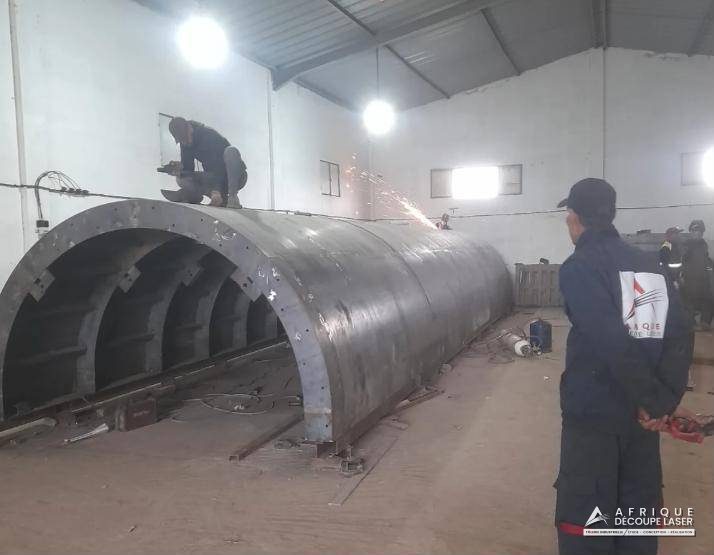
Curved structure in production 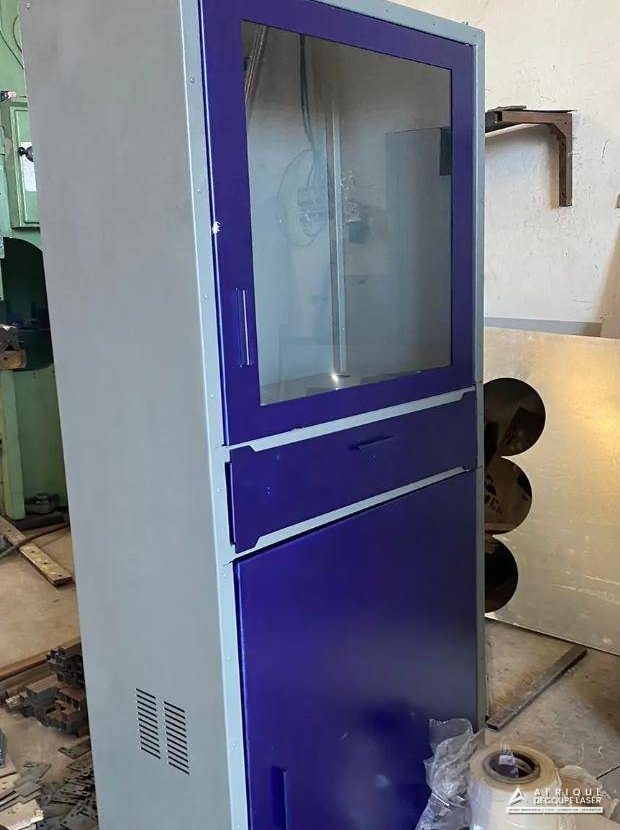
Folded sheet metal cabinet


What we need to quote
- 01The assembly drawing and parts list
- 02The materials and grades
- 03Your preferred process, if any
- 04The required finish: as welded or ground
- 05The quantity, and whether the need is one-off or recurring
- 06Any inspections or documents required
Frequently asked questions
Which welding processes do you use?
Semi-automatic welding and laser welding. The process is chosen for each assembly according to the material, thickness, joint access and required appearance.
Which weld finishes do you offer?
Welds can be left as welded or ground, depending on the use and the required appearance. Tell us in your request, especially for visible parts.
Can you manufacture a complete assembly?
Yes: parts are cut, bent or rolled in our workshop, then welded together. You receive a sub-assembly rather than a batch of loose parts.
Which documents should I provide for a welded assembly?
An assembly drawing with a parts list and, if possible, the 3D model of the assembly. Also state any inspections or documents required at delivery.
Related pages
A welded sub-assembly to manufacture?
Welding & assembly is preselected in the form. Attach your assembly drawing and specify the required finish.